Quarterly Investment Newsletter — Q1 2026 Review
Dear Wela Clients,
As we reflect on the first quarter of 2026, one word stands out above all others: uncertainty.
From geopolitical tensions in the Middle East to continued technological transformation driven by artificial intelligence, markets have navigated a complex and rapidly evolving landscape.
While headlines have been dramatic at times, the underlying message for our clients remains consistent:
Volatility is normal, and discipline is rewarded.
In this quarter’s update, we’ll walk through the key drivers of market performance, what they mean for your portfolio, and how we are positioning portfolios moving forward.
The Big Story: Geopolitics Returns to Center Stage
The escalation of the U.S.-Iran conflict became one of the defining events of Q1. The situation intensified following direct military actions and leadership changes within Iran, leading to increased uncertainty across global markets.
Markets responded quickly, but importantly, not irrationally. We saw:
- A spike in oil prices
- Strength in the U.S. dollar
- Increased demand for safe-haven assets like gold
However, broader equity and fixed income markets remained relatively stable, suggesting investors are pricing in risk, but not panic.
Three Key Takeaways from the Conflict
- Markets are adjusting, not collapsing
Investors are recognizing elevated geopolitical risk but are not yet pricing in a prolonged global disruption.
- Oil is the transmission mechanism
The primary economic impact has been through energy prices, which directly affect inflation.
- Duration matters more than intensity
The longer the conflict persists, the greater the potential for economic impact.
Oil, Inflation, and the Economic Outlook
Oil prices surged during the quarter. This matters because energy prices ripple through the entire economy:
- Higher gasoline costs reduce consumer spending
- Increased input costs pressure businesses
- Inflation expectations rise
Despite this, the U.S. economy has shown resilience. Current projections suggest:
- GDP growth around 2.5%–2.8%
- Unemployment remaining stable near 4%–4.5%
That said, the outlook remains fragile. If oil prices stay elevated or the conflict expands, we could see:
- Slower economic growth
- Higher inflation (stagflation risk)
- Increased market volatility
Why This Oil Shock May Be Different (and Why It May Not Be)
- While the headlines feel alarming, history provides important context.
- The chart below shows that markets have historically recovered quickly following oil-related geopolitical events.
Key Historical Insight:
- Short-term declines are common
- Long-term recoveries are typical
- Markets adapt as supply disruptions normalize

Additionally, today’s environment has one critical difference:
The U.S. Is Now the World’s Largest Energy Producer
As highlighted in the chart below, the U.S. produces more energy than any other country.
This structural shift means:
- The U.S. is less vulnerable to foreign supply shocks
- Energy price spikes tend to be more temporary
- Domestic production helps stabilize global markets

In short, while oil shocks still matter, their long-term impact may be more muted than in past decades.
Artificial Intelligence: A Once-in-a-Generation Investment Cycle
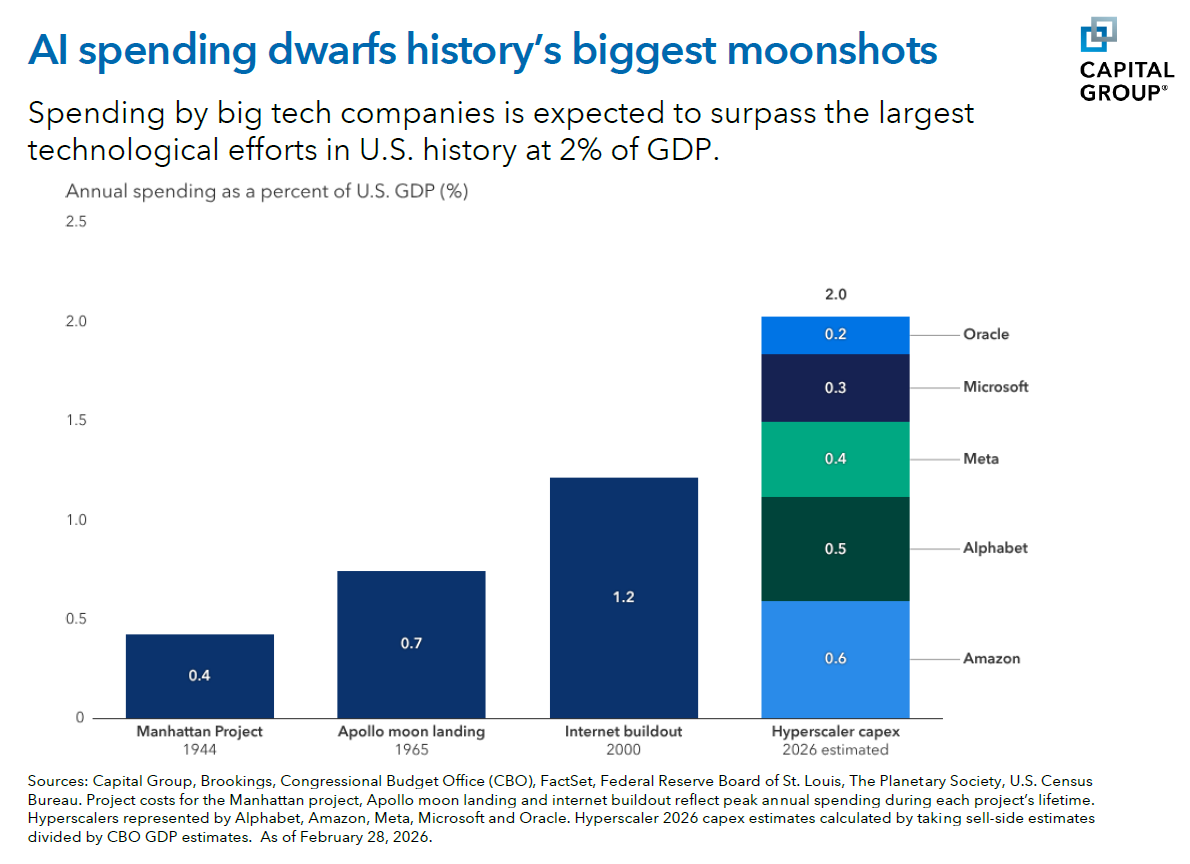
While geopolitics dominated headlines, a quieter, but arguably more important trend continued to unfold: the explosion in AI investment.
According to Capital Group data, AI-related capital spending is expected to reach 2% of U.S. GDP in 2026, surpassing historic initiatives like:
- The Manhattan Project
- The Apollo moon landing
- The internet buildout
What This Means for Investors
This level of investment signals:
- A long-term structural growth trend
- Opportunities across multiple industries
- A shift toward “infrastructure” companies supporting AI
Importantly, the benefits are not limited to technology companies. Capital is flowing into:
- Semiconductor manufacturers
- Industrial equipment providers
- Energy and data center infrastructure
This reinforces our view that diversification across sectors remains critical.
Market Volatility: A Feature, Not a Bug
Periods like Q1 often feel unusual, but they are not.
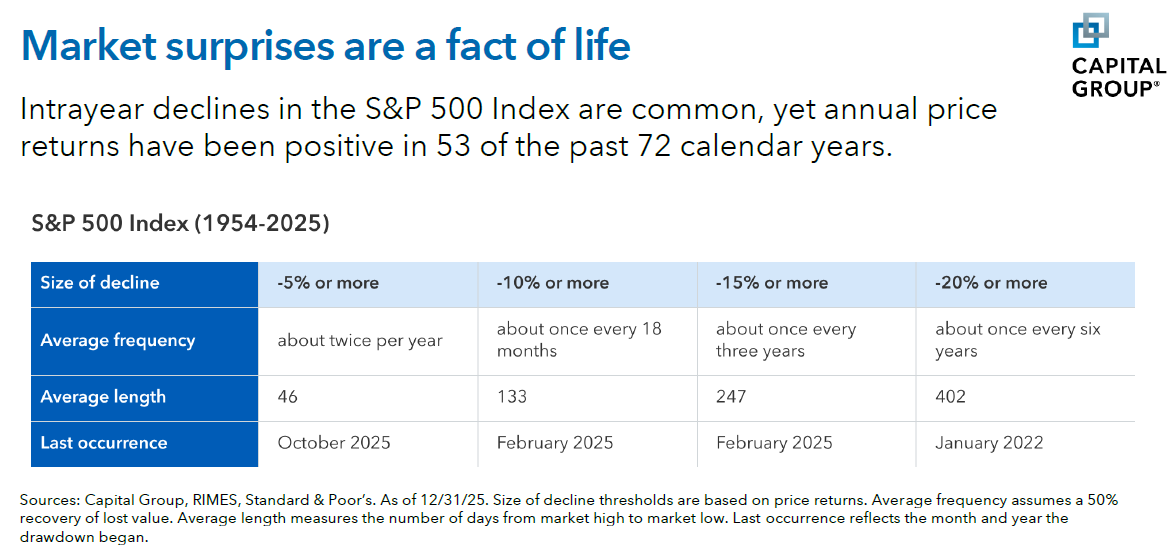
The data below reminds us:
- Market declines of 5% occur about twice per year
- Corrections of 10% happen roughly every 18 months
- Despite this, markets have delivered positive annual returns in 53 of the past 72 years
This is an important reminder: Volatility is normal. It is the price we pay for long-term returns.
The Federal Reserve and Interest Rates
The Federal Reserve remains in a wait-and-see mode.
According to Vanguard’s latest outlook:
- The Fed is expected to proceed cautiously
- Only one rate cut is anticipated in 2026
- Policy is near “neutral”—neither stimulating nor restrictive
However, the Iran conflict complicates this outlook:
- Higher oil prices could keep inflation elevated
- This may delay or reduce rate cuts
- Financial conditions could tighten if volatility persists
For fixed income investors, this reinforces the importance of:
- Income generation
- Duration management
- High-quality credit exposure
Portfolio Positioning: Staying Disciplined
In times like these, our role is not to predict headlines, but to prepare portfolios to withstand them.
What Wela is Focused On
- Maintaining Diversification
Across asset classes, sectors, and geographies.
- Emphasizing Income in Fixed Income
Higher yields today provide a cushion against volatility.
- Selective Equity Exposure
Dividend growers
Companies tied to long-term themes (AI, infrastructure, healthcare)
Businesses with strong balance sheets
- Avoiding Emotional Decisions
Market shocks can create opportunities, but only for disciplined investors.
- Putting It All Together
Markets are influenced by events we cannot predict
Volatility is inevitable, but temporary
Long-term fundamentals ultimately drive returns
While the U.S.-Iran conflict has introduced new risks, it has not altered the core drivers of long-term investment success.
Closing Thoughts
We understand that periods like this can feel unsettling. Headlines are often designed to capture attention, not provide perspective.
Our job is to remain focused on what matters:
- Your long-term goals
- A disciplined investment process
- Thoughtful portfolio construction
We continue to monitor these developments closely and will adjust where appropriate, but always with a long-term lens.
If you have any questions about how current events may impact your portfolio, we are always here to help.
Warm regards,
Upcoming Client Event
Annual Spring Cleaning-Shred It Event , RSVP NOW ( if you haven't already )
Securely Shred all your old documents. Bring your your family members, friends, neighbors, or coworkers. Enjoy complimentary breakfast tacos, donuts, coffee, and juice.
WHEN: Saturday, April 11, 2026 from
WHERE: Wela Financial Advisory
WHAT TIME: 8:30a.m. to 11:30a.m. (come and go)
Ready to talk strategy? See our current services.
Brent Forrest & Associates, LLC. dba Wela Financial Advisory (Wela) is a registered investment adviser. Information presented is for educational purposes only. It should not be considered specific investment advice, does not take into consideration your specific situation, and does not intend to make an offer or solicitation for the sale or purchase of any securities or investment strategies. Investments involve risk and are not guaranteed. Be sure to consult with a qualified financial adviser and/or tax professional before implementing any strategy discussed herein.

